Texts
¿Seguimos en el juego?
por | by Paola Santoscoy
Partamos de esta pregunta. Y digamos también, incluso antes de revelar de qué juego se trata y cómo éste opera, que lo importante no es la respuesta sino aquello que genera la pregunta. Lo importante aquí es la duda; el momento entre la seriedad y el desenfado, entre la realidad y la ficción. Utilizo entonces la pregunta “¿Estamos todavía dentro del juego?” como el punto de entrada a la más reciente obra de Rubén Gutiérrez: Banality by repetition by repetition, (they live: the reality of knowledge) (2009). Una de las más complejas en su repertorio, esta obra es un compendio de referencias provenientes del cine, la ciencia ficción, el mundo del entretenimiento, la filosofía contemporánea, el arte contemporáneo, e incluso de la situación socioeconómica y política actual. El resultado es un video que, más que una sucesión de referencias, presenta un verdadero cruce entre éstas.
Uno de los temas recurrentes en la obra de Gutiérrez, y también una de las fascinaciones que lo han acompañado desde niño, es la ciencia ficción. En el caso de Banality by repetition… , la escena alrededor de la que gira el video –la sorpresiva aniquilación del artista– tiene un parentesco innegable con la película eXistenZ (1999) dirigida por David Cronenberg. eXistenZ es el nombre de un juego de realidad virtual sobre el que trata la película de Cronenberg, y que muy al estilo de este cineasta canadiense está lleno de violencia, misterio, sensualidad y gore: los participantes se conectan al juego de manera colectiva mediante un orificio en la espalda baja, y el juego mismo es una especie de híbrido entre un órgano humano de apariencia grotesca y un joystick. La trama de la película se desarrolla alrededor de las aventuras de dos personajes, Allegra ?quien supuestamente es “la mejor diseñadora de juegos del mundo”? y Ted, dentro de este juego. Cambiando de escenario continuamente, Cronenberg logra de manera simple y elegante generar la ilusión de una realidad paralela, que hacia el final se complica aún más revelando al “verdadero” diseñador, quien termina por ser asesinado.
En Banality by repetition…, Gutiérrez adapta la situación para ser asesinado bajo la acusación de ser “el mejor video artista del mundo”. Así, en un remake de la escena final de eXistenZ, dos jóvenes, que parecen ser sus admiradores, se acercan al artista para confrontarlo: ¿No crees que el mejor video artista del mundo debería ser castigado por deformar la realidad? A esta pregunta le siguen otras líneas incriminatorias y la conversación pronto termina con el asesinato de Nourish-Gutiérrez: ¡Muerte al demonio! ¡Muerte al arte! ¡Muerte a lo superficial! gritan victoriosos estos jóvenes que parecen salidos de un video musical. Y eso no es todo, el sitio en el que tiene lugar el asesinato es un museo (el mismo en el cual la obra se presenta), de tal forma que como espectador, uno se reconoce ?¿dentro del juego?? como parte del sistema de legitimación al que Gutiérrez alude de forma teatralizada. Pues al final de cuentas se trata de una farsa, de una escena actuada, ¿cierto?
El personaje asesinado claramente representa el mal, un demonio que hay que erradicar. Sin embargo, estas consignas trasladadas al terreno del arte se convierten en una declaración irreverente de frente a la obra misma, a la figura del artista y ultimadamente de frente a la institución. Banality by repetition… se desarrolla alrededor de la autoaniquilación del artista. Mientras que las dos definiciones con las que abre el video ?la de la palabra filosofía, extraída del Diccionario del Diablo (1911) de Ambrose Bierce, y la de banalidad? introducen un tono de rebeldía e incredulidad que apunta hacia una misma dirección: el cinismo. Desde ahí opera la obra de Gutiérrez. ¿Qué quiero decir con esto? Que se trata de alguien que ha incorporado la duda constante a su estar en el mundo, y como consecuencia a su proceso artístico. Los gestos provocativos aparentemente inofensivos de sus obras son producto de un profundo y genuino cuestionamiento sobre aquello que conforma su realidad y su condición como artista. Para el cínico no existe una manera absolutista de ver el mundo, así como tampoco existen valores absolutos y estables. De ahí lo esquizoide de su obra, pues al mismo tiempo que promulga algo, acto seguido se mofa de ello, minando cualquier posibilidad de una lectura unívoca.
Uno de los estudios más interesantes sobre el sentido contemporáneo de lo cínico es el desarrollado desde el terreno de la crítica cultural por el filósofo alemán Peter Sloterdijk en su libro Crítica de la Razón Cínica (1988). Sloterdijk explica el cinismo como un estado de conciencia producto del pensamiento ilustrado, el epicentro de la destrucción de todos los ideales, absolutos o verdades en Occidente, ya sea ontológicos o morales. Ser cínico es entonces ser nihilista, y al mismo tiempo saberse parte de un sistema cuya existencia o valores uno mismo ya no puede ver como absolutos. Sin duda este estado tiene algo de melancólico pues, dice Sloterdijk, “los cínicos no son tontos y más de una vez se dan cuenta, total y absolutamente, de la nada a que todo conduce.” Sloterdijk recupera el sentido griego del cinismo para hablar de un estado de conciencia que mezcla ironía y sarcasmo con una actitud de celebración y de afirmación de la vida y al que, sobra decir, considera más constructivo. En sus obras Gutiérrez, se inclina más hacia este lado pues no repara en mostrar su incredulidad y establece un juego entre lo nuevo, lo viejo, lo original, la copia; robarse-apropiarse de cosas para utilizarlas cínicamente, pero siempre con humor.
La obra In the Interstices of History, Biography, Reality and Memory (2009) es un mural de piso a techo realizado in situ que, dividido en cuatro grandes secciones, reúne una colección de dibujos que han sido una constante en el trabajo de Gutiérrez, y es tal vez el proceso más íntimo y afectivo mediante el cual se apropia de escenas provenientes de aquello a lo que está expuesto, que consume, podríamos decir, del mundo del entretenimiento, del arte, la moda, o los noticieros, pero también mediante el cual le da salida a imágenes almacenadas en su memoria. Cada dibujo es una escena, una situación posible, un momento que remite a una narrativa, pero que mediante el trazo del artista ha cobrado un carácter independiente de esa fuente original. En los dibujos, se yuxtaponen personajes y escenas de películas, series y programas televisivos, etc. con textos provenientes del arte conceptual, la teoría del arte, la teoría crítica y la filosofía. Lo banal y lo profundo comparten un mismo espacio que resulta en un cruce de cables intencional. El mural es también de alguna manera el terreno en donde todos los dibujos confluyen en una especie de storyboard desplegado, desordenado, incongruente, y a la vez seductor. La referencia a eXistenZ reaparece aquí en los rostros de cuatro de sus personajes, Nourish entre ellos. Los textos de los que Gutiérrez se apropia, y a los que como a las imágenes les ha otorgado una segunda vida al colocarlos en otro contexto, son fragmentos de escritos de pensadores tan diversos como Michel Foucault, Guy Debord, Theodor W. Adorno, Gilles Deleuze, Félix Guattari, Michel De Certeau, Paul Virilio y por supuesto, Peter Sloterdijk, entre otros. Por otro lado, no es de sorprender que el lenguaje que Gutiérrez utiliza primordialmente sea el inglés: el idioma de Hollywood.
Frases como “El mejor video artista del mundo” o “la mejor obra del arte del mundo” le sacan una sonrisa a cualquiera; no hay modo de tomarlas en serio. En este sentido, The Best Art Work in the World! (2008) es una broma muy bien elaborada, pues utiliza de manera perspicaz los códigos y el lenguaje del mundo del arte para despojarlo de seriedad y así posibilitar un escenario que no es el esperado. El artista se encuentra en un paisaje desértico que funciona como alusión a un desierto cultural en donde se enfrenta con un personaje retador que le pide le enseñe la mejor obra de arte del mundo, o bien se comerá su alma. Hans Ulrich Obrist, el omnipresente curador suizo, es quien en esta situación encarna al demonio en persona. Si el artista sale bien librado de esta prueba, es porque entiende que aquéllo es un juego de poder y de lenguaje. The Best Art Work in the World! es el primero una serie de videos realizados en animación cuadro por cuadro que duran tan sólo un par de minutos, y que hasta el momento suman cuatro: Human Infestation Eradicated (2008), God and Death (2008), y Dirty Dog (2009). En estos clips, el artista se enfrenta a sus demonios al estilo de Simón del Desierto, el asceta en la película de Luis Buñuel que después de seis años en el desierto es tentado por el demonio, quien se manifiesta en distintas alucinaciones. Gutiérrez, por su parte, se enfrenta al curador Hans Ulrich Obrist y, nada más y nada menos, al pintor Francisco Goya, a quien vence en un mano a mano de rap para después sobrevivir un escenario apocalíptico y emerger en el último video como un forajido, bailando frenéticamente al ritmo de la canción “perro sucio” de la banda N.E.R.D. ?I’m an outlaw, quick on the draw, Somethin’ you’ve never seen before, and I dare a mother fucker to come in my face… It’s so real, it’s how I feel, it’s this society, that makes a nigga wanna kill? mientras empuña una pistola en actitud de alguien que ya tiene identificado a su enemigo, para finalmente ser de nuevo arrojado al desierto.
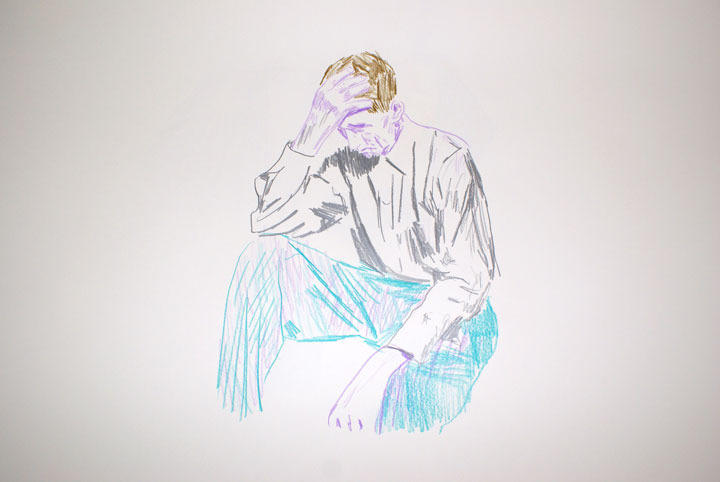
Regresando a Banality by repetition…, el dibujo tiene aquí también un papel preponderante y más complejo. Dentro de la categoría “posibilidades” se nos presentan una serie de posibles situaciones y personajes, todos en dibujo, que se suceden uno tras de otro, y a los que el artista ha clasificado dentro del video bajo títulos como por ejemplo: “un hada, una caída, algo de amor… un punk, algunos zombies, muerte… sexo casual, una bella durmiente… una tentación, un clímax, una niña estúpida, el fin del mundo… un místico”, como si nos dejara ver de manera transparente cuáles son algunas de sus obsesiones, y de los clichés del entretenimiento por supuesto. El listado pareciera incluir todos los ingredientes necesarios para una película de amor, de horror, de acción, etc. El artista lleva la apropiación de estas escenas un paso más adelante cuando en otra sección del video, bajo la categoría “situaciones”, recrea las escenas de los dibujos con la ayuda de personas que no son actores profesionales. De tal modo que los remakes con personajes mexicanos están removidos al menos tres veces de su fuente original, que a su vez es una ficción. Lo que hace de estas escenas algo más huidizo, algo que se parece a algo que hemos visto antes, que reconocemos de alguna manera, pero que es nuevo. Y es nuevo y no, pues en realidad es un comentario sobre lo repetitivo de la historia, sobre el entretenimiento como algo cíclico, que pareciera estar generando productos nuevos, cuando en realidad se trata de lo mismo disfrazado de novedad.
La violencia es un elemento que está presente en muchas de las obras de este artista y en el video Banality by repetition… se manifiesta de distintas maneras: desde el asesinato del artista a mano armada, los grupos de jóvenes que recorren la ciudad a manera de escuadrones eliminando a “la vieja piel”, hasta la presencia de zombies, o incluso en la música. Los zombies, los muertos vivientes autómatas por excelencia del cine norteamericano del periodo de la Guerra Fría encarnan un comentario social de una sociedad en la cual el consumismo irreflexivo tiene al país comiéndose a sí mismo; algo que puede fácilmente trasladarse al presente. Por su parte, las imágenes de jóvenes armados encuentran una resonancia macabra en la situación de violencia que vive el país. Sin embargo, se trata de una espectacularización de la violencia, entendiendo espectacularizar, en palabras del artista, como un sentimiento de rebeldía, de pronto, de una manera muy maquillada o muy fashion. Esto resulta en algo que raya en la pura pose, en una violencia que podemos ver sin alterarnos pues está estetizada. Y es que la violencia no sólo está en las armas. No son casos particulares los que el artista señala, o denuncia, sino todo un sistema en descomposición. Destaca de la figura del cínico que le es imposible tomar distancia y está involucrado hasta el fondo; sólo desde ahí es capaz de digerir lo que produce el sistema para lanzar de regreso algo masticado, transformándolo.
Are we still in the game?
Let’s make this query our starting point. And let’s also say, even before revealing what game we’re talking about and how it unfolds, that it’s not the answer what’s important, but rather what elicits the question. What’s important here is the doubt; the instant between seriousness and jauntiness, between reality and fiction. So I pose this question, “Are we still in the game”, as the entryway to Rubén Gutiérrez’ latest work: Banality by repetition by repetition, (they live: the reality of knowledge) (2009). This work –among his most complex in his repertoire– is a compilation of references from motion pictures, science fiction, pop culture, the entertainment world, contemporary philosophy, contemporary art, and even today’s socioeconomic and political state of affairs. The result is a video that more than a sequence of references, is a veritable crossroads for them.
One of the recurring motifs in Gutiérrez’ work, and also one of the things that has enthralled him since childhood is science fiction. In Banality by repetition…, the scene around which the video revolves –the artist’s surprising killing– has an undeniable kinship with the movie eXistenZ (1999), directed by David Cronenberg. eXistenZ is the name of the virtual reality game which is the subject of Cronenberg’s movie. True to the Canadian director’s form, it is packed with violence, mystery, sex, and gore: players must plug themselves in collectively via a port in the small of their backs. The game itself is a cross between a grotesque-looking human organ and a joystick. The movie’s plot follows the adventures of two characters, Allegra –allegedly “the greatest game designer in the world”, and Ted within the game. By constantly changing scenarios, Cronenberg is able to simply and elegantly generate the illusion of a parallel reality which becomes even more convoluted by revealing the “real” designer, who ends up being assassinated.
In Banality by repetition… Gutiérrez tweaks the situation so as to be murdered under the allegation of being “the greatest video artist in the world.” So, in a remake of the closing eXistenZ scene, two young men who appear to be fans go up to the artist to confront him: Don’t you think that the greatest video artist in the world should be punished for deforming reality? This question is followed by other accusatory lines and the conversation soon ends with Gutiérrez’ assassination. Death to the devil! Death to art! Death to superficiality!, triumphantly cry these youths that look like they just walked out of a music video. That’s not all. The setting for the murder is a museum (the same where the work is on display) so that as a spectator, you recognize yourself –within the game? – as part of the authentication system that Gutiérrez theatrically alludes to. For at the end of the day, it’s a sham, a play-acted scene, right?
The slain character clearly represents evil, a devil to be cast out. Placed in an art setting, however, these slogans become an irreverent statement before the work itself, the artist and ultimately, the institution. Banality by repetition… unfolds around the artist’s self-annihilation. Meanwhile, the video’s two opening definitions –of the word philosophy, taken from Ambrose Bierce’s The Devil’s Dictionary (1911), and of banality– insert a note of rebellion and incredulity that points in the same direction: cynicism. That’s were Gutiérrez’ work is coming from. What do I mean by that? That this is someone who has incorporated constant doubt into his time on Earth and, consequently, into his artistic process. His works’ seemingly harmless provocative gestures are the result of a deep, heartfelt soul-searching regarding what makes up his reality and his condition as an artist. For the cynic, there is no absolutist way of seeing the world, just as there are no absolute, stable values. Therein lies the schizoid aspect of his work: at the same time it proclaims something, it immediately turns around and scoffs at it, undermining any possibility of a univocal reading.
One of the most intriguing studies on the contemporary sense of cynicism is the one carried out from the province of cultural critique by German philosopher Peter Sloterdijk in his book Critique of Cynical Reason (1988). Sloterdijk explains cynicism as a state of consciousness borne from illustrated thought, while the latter is the epicenter of the destruction of all ideals, absolutes or truths –moral or ontological– in the West. Being cynical, then, means being nihilistic while knowing yourself part of a system whose existence or values one can no longer view as absolute. This state undoubtedly is borderline melancholic as, Sloterdijk says: “cynics are not dumb, and every now and then they certainly see the nothingness to which everything leads”. Sloterdijk rescues the Greek sense of cynicism to address a state of consciousness that blends irony and sarcasm with a celebratory and life-affirming attitude. Obviously, he considers this more edifying. In his works, Gutiérrez leans toward this side, as he doesn’t shy away from showing his incredulity and establishes a play between new, old, authentic, facsimile: borrow/steal things to use them cynically, but always tongue-in-cheek.
His work In the Interstices of History, Biography, Reality and Memory (2009) is a floor to ceiling mural done in situ, in four large sections, that gathers a collection of drawings. This has been a staple in Gutiérrez’ work and is arguably the most intimate, caring process through which he helps himself to scenes taken from what he has been exposed to from newscasts and the entertainment, art, and fashion worlds, and makes them his own. It is also a conduit for channeling images stored in his memory. Each drawing is a scene, a possible situation, a moment that alludes to a narrative, but that has become unfettered from that original source through the artist’s strokes. Characters and scenes from movies, TV shows, sitcoms, etc. are juxtaposed with texts from conceptual art, art theory, critical theory, and philosophy. Frivolity and gravitas share the same space, for an intentional short-circuit. In a way, the mural is also the arena where all the drawings converge, a sort of spread out, messy, incongruous, yet seductive storyboard. The shout-out to eXistenZ reappears here in the faces of four of the characters, one of them the original designer. The texts sampled by Gutiérrez, which –like the images– have been given a new lease on life by his placing them in a different context, include fragments from writings by thinkers as varied as Michel Foucault, Guy Debord, Theodor W. Adorno, Gilles Deleuze, Félix Guattari, Michel De Certeau, Paul Virilio, and –obviously– Peter Sloterdijk, to name a few. On the other hand, it comes as no surprise that Gutiérrez’ language of choice is English; Hollywood’s tongue.
Labels such as “The World’s Best Video Artist” or “the world’s best art work” draw a smile from everyone: they’re impossible to take seriously. In this sense, The Best Art Work in the World! (2008) is a full-blown joke, as it shrewdly uses the art world’s ciphers and lingo to denude it of seriousness and allow an unexpected scenario. The artist finds himself in a desert landscape which references a cultural desert, where he faces a character who challenges him to show him the best art work in the world, or risk his soul being devoured. Hans Ulrich Obrist, the ubiquitous Swiss curator, embodies the demon in this tableau. The artist emerges unscathed from this trial only because he understands it is a power struggle and a word play. The Best Art Work in the World! is the first of a series of videos produced in stop-action animation, a few minutes long, and numbering 4 to date: Human Infestation Eradicated (2008), God and Death (2008), and Dirty Dog (2009). In these clips, the artist faces his demons along the lines of Simon of the Desert, the fanatic who leads an ascetic life in Luis Buñuel’s movie and after six years in the desert is tempted by the devil, which appears to him in a variety of hallucinations. Gutiérrez, in turn, faces curator Hans Ulrich Obrist and none other than painter Francisco Goya, whom he bests in a rap face-off, only to later survive an apocalyptic scenario and emerge in the final video as an outlaw, dancing in a frenzy to the beat of N.E.R.D.’s “dirty dog” song –I’m an outlaw, quick on the draw, Somethin’ you’ve never seen before, and I dare a mother fucker to come in my face… It’s so real, it’s how I feel, it’s this society, that makes a nigga wanna kill– while holding a gun in way that signals he has already identified his enemy, only to eventually be flung again into the desert.
Going back to Banality by repetition…, the drawings here also have a predominant, more complex role. Within the “possibilities” category, we’re presented with a series of possible situations and characters, all drawn, that follow one after another, and that the artist has classified within the video under titles like: “a fairy, a fall, some love… a punk, some zombies, death… casual sex, a sleeping beauty… a temptation, a climax, a stupid child, the end of the world… a mystic,” as if he were allowing us to transparently see which are some of his obsessions, and obviously entertainment clichés. The list would seem to include all the necessary ingredients for a romantic, horror, or action movie. The artist pushes the envelope in making these scenes his own when in another section of the video, under the “situations” category, he recreates the drawn scenes with the help of non-professional actors, so the remakes with Mexican characters we see here are at least three times removed from their original source which, in turn, is fiction. This makes these scenes even more elusive, something that bears a resemblance to something we’ve seen before, that we somehow recognize, but that is new. It’s new and it’s not, as it is really a comment on history’s repetitiveness, on entertainment as cyclical, that might seem to be generating new products but is actually the same-old same-old whitewashed as novelty.
Violence is an element present in many of this artist’s works, and in the Banality by repetition… video it comes to the fore in different guises: from the artist’s shooting death and the gangs of youths patrolling the streets death squad-style doing away with “old skin”, to the presence of zombies or even in the music. Zombies, those undead robots beyond compare of Cold War-era American cinema, embody a social commentary on a society in which unchecked consumerism has the country cannibalizing itself; something that can easily resonate today. On the other hand, the images of armed youths grisly echo the state of violence sweeping the country. This, however, is about making violence spectacular, which in the artist’s words is making a feeling of rebellion into something spectacular in a very made-up or fashionable manner. This yields something that is borderline affectation, a violence so stylized we can watch it without getting upset. The thing is that violence is not only in weapons. The artist is not singling out or denouncing any case in particular, but rather an entire system in decline. Something eminently salvageable from the cynic is that this is someone incapable of keeping a distance and is therefore involved to the hilt, and it is only there that he can digest what the system produces in order to spit back something chewed, transformed.
por | by Paola Santoscoy
Partamos de esta pregunta. Y digamos también, incluso antes de revelar de qué juego se trata y cómo éste opera, que lo importante no es la respuesta sino aquello que genera la pregunta. Lo importante aquí es la duda; el momento entre la seriedad y el desenfado, entre la realidad y la ficción. Utilizo entonces la pregunta “¿Estamos todavía dentro del juego?” como el punto de entrada a la más reciente obra de Rubén Gutiérrez: Banality by repetition by repetition, (they live: the reality of knowledge) (2009). Una de las más complejas en su repertorio, esta obra es un compendio de referencias provenientes del cine, la ciencia ficción, el mundo del entretenimiento, la filosofía contemporánea, el arte contemporáneo, e incluso de la situación socioeconómica y política actual. El resultado es un video que, más que una sucesión de referencias, presenta un verdadero cruce entre éstas.
Uno de los temas recurrentes en la obra de Gutiérrez, y también una de las fascinaciones que lo han acompañado desde niño, es la ciencia ficción. En el caso de Banality by repetition… , la escena alrededor de la que gira el video –la sorpresiva aniquilación del artista– tiene un parentesco innegable con la película eXistenZ (1999) dirigida por David Cronenberg. eXistenZ es el nombre de un juego de realidad virtual sobre el que trata la película de Cronenberg, y que muy al estilo de este cineasta canadiense está lleno de violencia, misterio, sensualidad y gore: los participantes se conectan al juego de manera colectiva mediante un orificio en la espalda baja, y el juego mismo es una especie de híbrido entre un órgano humano de apariencia grotesca y un joystick. La trama de la película se desarrolla alrededor de las aventuras de dos personajes, Allegra ?quien supuestamente es “la mejor diseñadora de juegos del mundo”? y Ted, dentro de este juego. Cambiando de escenario continuamente, Cronenberg logra de manera simple y elegante generar la ilusión de una realidad paralela, que hacia el final se complica aún más revelando al “verdadero” diseñador, quien termina por ser asesinado.
En Banality by repetition…, Gutiérrez adapta la situación para ser asesinado bajo la acusación de ser “el mejor video artista del mundo”. Así, en un remake de la escena final de eXistenZ, dos jóvenes, que parecen ser sus admiradores, se acercan al artista para confrontarlo: ¿No crees que el mejor video artista del mundo debería ser castigado por deformar la realidad? A esta pregunta le siguen otras líneas incriminatorias y la conversación pronto termina con el asesinato de Nourish-Gutiérrez: ¡Muerte al demonio! ¡Muerte al arte! ¡Muerte a lo superficial! gritan victoriosos estos jóvenes que parecen salidos de un video musical. Y eso no es todo, el sitio en el que tiene lugar el asesinato es un museo (el mismo en el cual la obra se presenta), de tal forma que como espectador, uno se reconoce ?¿dentro del juego?? como parte del sistema de legitimación al que Gutiérrez alude de forma teatralizada. Pues al final de cuentas se trata de una farsa, de una escena actuada, ¿cierto?
El personaje asesinado claramente representa el mal, un demonio que hay que erradicar. Sin embargo, estas consignas trasladadas al terreno del arte se convierten en una declaración irreverente de frente a la obra misma, a la figura del artista y ultimadamente de frente a la institución. Banality by repetition… se desarrolla alrededor de la autoaniquilación del artista. Mientras que las dos definiciones con las que abre el video ?la de la palabra filosofía, extraída del Diccionario del Diablo (1911) de Ambrose Bierce, y la de banalidad? introducen un tono de rebeldía e incredulidad que apunta hacia una misma dirección: el cinismo. Desde ahí opera la obra de Gutiérrez. ¿Qué quiero decir con esto? Que se trata de alguien que ha incorporado la duda constante a su estar en el mundo, y como consecuencia a su proceso artístico. Los gestos provocativos aparentemente inofensivos de sus obras son producto de un profundo y genuino cuestionamiento sobre aquello que conforma su realidad y su condición como artista. Para el cínico no existe una manera absolutista de ver el mundo, así como tampoco existen valores absolutos y estables. De ahí lo esquizoide de su obra, pues al mismo tiempo que promulga algo, acto seguido se mofa de ello, minando cualquier posibilidad de una lectura unívoca.
Uno de los estudios más interesantes sobre el sentido contemporáneo de lo cínico es el desarrollado desde el terreno de la crítica cultural por el filósofo alemán Peter Sloterdijk en su libro Crítica de la Razón Cínica (1988). Sloterdijk explica el cinismo como un estado de conciencia producto del pensamiento ilustrado, el epicentro de la destrucción de todos los ideales, absolutos o verdades en Occidente, ya sea ontológicos o morales. Ser cínico es entonces ser nihilista, y al mismo tiempo saberse parte de un sistema cuya existencia o valores uno mismo ya no puede ver como absolutos. Sin duda este estado tiene algo de melancólico pues, dice Sloterdijk, “los cínicos no son tontos y más de una vez se dan cuenta, total y absolutamente, de la nada a que todo conduce.” Sloterdijk recupera el sentido griego del cinismo para hablar de un estado de conciencia que mezcla ironía y sarcasmo con una actitud de celebración y de afirmación de la vida y al que, sobra decir, considera más constructivo. En sus obras Gutiérrez, se inclina más hacia este lado pues no repara en mostrar su incredulidad y establece un juego entre lo nuevo, lo viejo, lo original, la copia; robarse-apropiarse de cosas para utilizarlas cínicamente, pero siempre con humor.
La obra In the Interstices of History, Biography, Reality and Memory (2009) es un mural de piso a techo realizado in situ que, dividido en cuatro grandes secciones, reúne una colección de dibujos que han sido una constante en el trabajo de Gutiérrez, y es tal vez el proceso más íntimo y afectivo mediante el cual se apropia de escenas provenientes de aquello a lo que está expuesto, que consume, podríamos decir, del mundo del entretenimiento, del arte, la moda, o los noticieros, pero también mediante el cual le da salida a imágenes almacenadas en su memoria. Cada dibujo es una escena, una situación posible, un momento que remite a una narrativa, pero que mediante el trazo del artista ha cobrado un carácter independiente de esa fuente original. En los dibujos, se yuxtaponen personajes y escenas de películas, series y programas televisivos, etc. con textos provenientes del arte conceptual, la teoría del arte, la teoría crítica y la filosofía. Lo banal y lo profundo comparten un mismo espacio que resulta en un cruce de cables intencional. El mural es también de alguna manera el terreno en donde todos los dibujos confluyen en una especie de storyboard desplegado, desordenado, incongruente, y a la vez seductor. La referencia a eXistenZ reaparece aquí en los rostros de cuatro de sus personajes, Nourish entre ellos. Los textos de los que Gutiérrez se apropia, y a los que como a las imágenes les ha otorgado una segunda vida al colocarlos en otro contexto, son fragmentos de escritos de pensadores tan diversos como Michel Foucault, Guy Debord, Theodor W. Adorno, Gilles Deleuze, Félix Guattari, Michel De Certeau, Paul Virilio y por supuesto, Peter Sloterdijk, entre otros. Por otro lado, no es de sorprender que el lenguaje que Gutiérrez utiliza primordialmente sea el inglés: el idioma de Hollywood.
Frases como “El mejor video artista del mundo” o “la mejor obra del arte del mundo” le sacan una sonrisa a cualquiera; no hay modo de tomarlas en serio. En este sentido, The Best Art Work in the World! (2008) es una broma muy bien elaborada, pues utiliza de manera perspicaz los códigos y el lenguaje del mundo del arte para despojarlo de seriedad y así posibilitar un escenario que no es el esperado. El artista se encuentra en un paisaje desértico que funciona como alusión a un desierto cultural en donde se enfrenta con un personaje retador que le pide le enseñe la mejor obra de arte del mundo, o bien se comerá su alma. Hans Ulrich Obrist, el omnipresente curador suizo, es quien en esta situación encarna al demonio en persona. Si el artista sale bien librado de esta prueba, es porque entiende que aquéllo es un juego de poder y de lenguaje. The Best Art Work in the World! es el primero una serie de videos realizados en animación cuadro por cuadro que duran tan sólo un par de minutos, y que hasta el momento suman cuatro: Human Infestation Eradicated (2008), God and Death (2008), y Dirty Dog (2009). En estos clips, el artista se enfrenta a sus demonios al estilo de Simón del Desierto, el asceta en la película de Luis Buñuel que después de seis años en el desierto es tentado por el demonio, quien se manifiesta en distintas alucinaciones. Gutiérrez, por su parte, se enfrenta al curador Hans Ulrich Obrist y, nada más y nada menos, al pintor Francisco Goya, a quien vence en un mano a mano de rap para después sobrevivir un escenario apocalíptico y emerger en el último video como un forajido, bailando frenéticamente al ritmo de la canción “perro sucio” de la banda N.E.R.D. ?I’m an outlaw, quick on the draw, Somethin’ you’ve never seen before, and I dare a mother fucker to come in my face… It’s so real, it’s how I feel, it’s this society, that makes a nigga wanna kill? mientras empuña una pistola en actitud de alguien que ya tiene identificado a su enemigo, para finalmente ser de nuevo arrojado al desierto.
Regresando a Banality by repetition…, el dibujo tiene aquí también un papel preponderante y más complejo. Dentro de la categoría “posibilidades” se nos presentan una serie de posibles situaciones y personajes, todos en dibujo, que se suceden uno tras de otro, y a los que el artista ha clasificado dentro del video bajo títulos como por ejemplo: “un hada, una caída, algo de amor… un punk, algunos zombies, muerte… sexo casual, una bella durmiente… una tentación, un clímax, una niña estúpida, el fin del mundo… un místico”, como si nos dejara ver de manera transparente cuáles son algunas de sus obsesiones, y de los clichés del entretenimiento por supuesto. El listado pareciera incluir todos los ingredientes necesarios para una película de amor, de horror, de acción, etc. El artista lleva la apropiación de estas escenas un paso más adelante cuando en otra sección del video, bajo la categoría “situaciones”, recrea las escenas de los dibujos con la ayuda de personas que no son actores profesionales. De tal modo que los remakes con personajes mexicanos están removidos al menos tres veces de su fuente original, que a su vez es una ficción. Lo que hace de estas escenas algo más huidizo, algo que se parece a algo que hemos visto antes, que reconocemos de alguna manera, pero que es nuevo. Y es nuevo y no, pues en realidad es un comentario sobre lo repetitivo de la historia, sobre el entretenimiento como algo cíclico, que pareciera estar generando productos nuevos, cuando en realidad se trata de lo mismo disfrazado de novedad.
La violencia es un elemento que está presente en muchas de las obras de este artista y en el video Banality by repetition… se manifiesta de distintas maneras: desde el asesinato del artista a mano armada, los grupos de jóvenes que recorren la ciudad a manera de escuadrones eliminando a “la vieja piel”, hasta la presencia de zombies, o incluso en la música. Los zombies, los muertos vivientes autómatas por excelencia del cine norteamericano del periodo de la Guerra Fría encarnan un comentario social de una sociedad en la cual el consumismo irreflexivo tiene al país comiéndose a sí mismo; algo que puede fácilmente trasladarse al presente. Por su parte, las imágenes de jóvenes armados encuentran una resonancia macabra en la situación de violencia que vive el país. Sin embargo, se trata de una espectacularización de la violencia, entendiendo espectacularizar, en palabras del artista, como un sentimiento de rebeldía, de pronto, de una manera muy maquillada o muy fashion. Esto resulta en algo que raya en la pura pose, en una violencia que podemos ver sin alterarnos pues está estetizada. Y es que la violencia no sólo está en las armas. No son casos particulares los que el artista señala, o denuncia, sino todo un sistema en descomposición. Destaca de la figura del cínico que le es imposible tomar distancia y está involucrado hasta el fondo; sólo desde ahí es capaz de digerir lo que produce el sistema para lanzar de regreso algo masticado, transformándolo.
Are we still in the game?
Let’s make this query our starting point. And let’s also say, even before revealing what game we’re talking about and how it unfolds, that it’s not the answer what’s important, but rather what elicits the question. What’s important here is the doubt; the instant between seriousness and jauntiness, between reality and fiction. So I pose this question, “Are we still in the game”, as the entryway to Rubén Gutiérrez’ latest work: Banality by repetition by repetition, (they live: the reality of knowledge) (2009). This work –among his most complex in his repertoire– is a compilation of references from motion pictures, science fiction, pop culture, the entertainment world, contemporary philosophy, contemporary art, and even today’s socioeconomic and political state of affairs. The result is a video that more than a sequence of references, is a veritable crossroads for them.
One of the recurring motifs in Gutiérrez’ work, and also one of the things that has enthralled him since childhood is science fiction. In Banality by repetition…, the scene around which the video revolves –the artist’s surprising killing– has an undeniable kinship with the movie eXistenZ (1999), directed by David Cronenberg. eXistenZ is the name of the virtual reality game which is the subject of Cronenberg’s movie. True to the Canadian director’s form, it is packed with violence, mystery, sex, and gore: players must plug themselves in collectively via a port in the small of their backs. The game itself is a cross between a grotesque-looking human organ and a joystick. The movie’s plot follows the adventures of two characters, Allegra –allegedly “the greatest game designer in the world”, and Ted within the game. By constantly changing scenarios, Cronenberg is able to simply and elegantly generate the illusion of a parallel reality which becomes even more convoluted by revealing the “real” designer, who ends up being assassinated.
In Banality by repetition… Gutiérrez tweaks the situation so as to be murdered under the allegation of being “the greatest video artist in the world.” So, in a remake of the closing eXistenZ scene, two young men who appear to be fans go up to the artist to confront him: Don’t you think that the greatest video artist in the world should be punished for deforming reality? This question is followed by other accusatory lines and the conversation soon ends with Gutiérrez’ assassination. Death to the devil! Death to art! Death to superficiality!, triumphantly cry these youths that look like they just walked out of a music video. That’s not all. The setting for the murder is a museum (the same where the work is on display) so that as a spectator, you recognize yourself –within the game? – as part of the authentication system that Gutiérrez theatrically alludes to. For at the end of the day, it’s a sham, a play-acted scene, right?
The slain character clearly represents evil, a devil to be cast out. Placed in an art setting, however, these slogans become an irreverent statement before the work itself, the artist and ultimately, the institution. Banality by repetition… unfolds around the artist’s self-annihilation. Meanwhile, the video’s two opening definitions –of the word philosophy, taken from Ambrose Bierce’s The Devil’s Dictionary (1911), and of banality– insert a note of rebellion and incredulity that points in the same direction: cynicism. That’s were Gutiérrez’ work is coming from. What do I mean by that? That this is someone who has incorporated constant doubt into his time on Earth and, consequently, into his artistic process. His works’ seemingly harmless provocative gestures are the result of a deep, heartfelt soul-searching regarding what makes up his reality and his condition as an artist. For the cynic, there is no absolutist way of seeing the world, just as there are no absolute, stable values. Therein lies the schizoid aspect of his work: at the same time it proclaims something, it immediately turns around and scoffs at it, undermining any possibility of a univocal reading.
One of the most intriguing studies on the contemporary sense of cynicism is the one carried out from the province of cultural critique by German philosopher Peter Sloterdijk in his book Critique of Cynical Reason (1988). Sloterdijk explains cynicism as a state of consciousness borne from illustrated thought, while the latter is the epicenter of the destruction of all ideals, absolutes or truths –moral or ontological– in the West. Being cynical, then, means being nihilistic while knowing yourself part of a system whose existence or values one can no longer view as absolute. This state undoubtedly is borderline melancholic as, Sloterdijk says: “cynics are not dumb, and every now and then they certainly see the nothingness to which everything leads”. Sloterdijk rescues the Greek sense of cynicism to address a state of consciousness that blends irony and sarcasm with a celebratory and life-affirming attitude. Obviously, he considers this more edifying. In his works, Gutiérrez leans toward this side, as he doesn’t shy away from showing his incredulity and establishes a play between new, old, authentic, facsimile: borrow/steal things to use them cynically, but always tongue-in-cheek.
His work In the Interstices of History, Biography, Reality and Memory (2009) is a floor to ceiling mural done in situ, in four large sections, that gathers a collection of drawings. This has been a staple in Gutiérrez’ work and is arguably the most intimate, caring process through which he helps himself to scenes taken from what he has been exposed to from newscasts and the entertainment, art, and fashion worlds, and makes them his own. It is also a conduit for channeling images stored in his memory. Each drawing is a scene, a possible situation, a moment that alludes to a narrative, but that has become unfettered from that original source through the artist’s strokes. Characters and scenes from movies, TV shows, sitcoms, etc. are juxtaposed with texts from conceptual art, art theory, critical theory, and philosophy. Frivolity and gravitas share the same space, for an intentional short-circuit. In a way, the mural is also the arena where all the drawings converge, a sort of spread out, messy, incongruous, yet seductive storyboard. The shout-out to eXistenZ reappears here in the faces of four of the characters, one of them the original designer. The texts sampled by Gutiérrez, which –like the images– have been given a new lease on life by his placing them in a different context, include fragments from writings by thinkers as varied as Michel Foucault, Guy Debord, Theodor W. Adorno, Gilles Deleuze, Félix Guattari, Michel De Certeau, Paul Virilio, and –obviously– Peter Sloterdijk, to name a few. On the other hand, it comes as no surprise that Gutiérrez’ language of choice is English; Hollywood’s tongue.
Labels such as “The World’s Best Video Artist” or “the world’s best art work” draw a smile from everyone: they’re impossible to take seriously. In this sense, The Best Art Work in the World! (2008) is a full-blown joke, as it shrewdly uses the art world’s ciphers and lingo to denude it of seriousness and allow an unexpected scenario. The artist finds himself in a desert landscape which references a cultural desert, where he faces a character who challenges him to show him the best art work in the world, or risk his soul being devoured. Hans Ulrich Obrist, the ubiquitous Swiss curator, embodies the demon in this tableau. The artist emerges unscathed from this trial only because he understands it is a power struggle and a word play. The Best Art Work in the World! is the first of a series of videos produced in stop-action animation, a few minutes long, and numbering 4 to date: Human Infestation Eradicated (2008), God and Death (2008), and Dirty Dog (2009). In these clips, the artist faces his demons along the lines of Simon of the Desert, the fanatic who leads an ascetic life in Luis Buñuel’s movie and after six years in the desert is tempted by the devil, which appears to him in a variety of hallucinations. Gutiérrez, in turn, faces curator Hans Ulrich Obrist and none other than painter Francisco Goya, whom he bests in a rap face-off, only to later survive an apocalyptic scenario and emerge in the final video as an outlaw, dancing in a frenzy to the beat of N.E.R.D.’s “dirty dog” song –I’m an outlaw, quick on the draw, Somethin’ you’ve never seen before, and I dare a mother fucker to come in my face… It’s so real, it’s how I feel, it’s this society, that makes a nigga wanna kill– while holding a gun in way that signals he has already identified his enemy, only to eventually be flung again into the desert.
Going back to Banality by repetition…, the drawings here also have a predominant, more complex role. Within the “possibilities” category, we’re presented with a series of possible situations and characters, all drawn, that follow one after another, and that the artist has classified within the video under titles like: “a fairy, a fall, some love… a punk, some zombies, death… casual sex, a sleeping beauty… a temptation, a climax, a stupid child, the end of the world… a mystic,” as if he were allowing us to transparently see which are some of his obsessions, and obviously entertainment clichés. The list would seem to include all the necessary ingredients for a romantic, horror, or action movie. The artist pushes the envelope in making these scenes his own when in another section of the video, under the “situations” category, he recreates the drawn scenes with the help of non-professional actors, so the remakes with Mexican characters we see here are at least three times removed from their original source which, in turn, is fiction. This makes these scenes even more elusive, something that bears a resemblance to something we’ve seen before, that we somehow recognize, but that is new. It’s new and it’s not, as it is really a comment on history’s repetitiveness, on entertainment as cyclical, that might seem to be generating new products but is actually the same-old same-old whitewashed as novelty.
Violence is an element present in many of this artist’s works, and in the Banality by repetition… video it comes to the fore in different guises: from the artist’s shooting death and the gangs of youths patrolling the streets death squad-style doing away with “old skin”, to the presence of zombies or even in the music. Zombies, those undead robots beyond compare of Cold War-era American cinema, embody a social commentary on a society in which unchecked consumerism has the country cannibalizing itself; something that can easily resonate today. On the other hand, the images of armed youths grisly echo the state of violence sweeping the country. This, however, is about making violence spectacular, which in the artist’s words is making a feeling of rebellion into something spectacular in a very made-up or fashionable manner. This yields something that is borderline affectation, a violence so stylized we can watch it without getting upset. The thing is that violence is not only in weapons. The artist is not singling out or denouncing any case in particular, but rather an entire system in decline. Something eminently salvageable from the cynic is that this is someone incapable of keeping a distance and is therefore involved to the hilt, and it is only there that he can digest what the system produces in order to spit back something chewed, transformed.